

Osteoarthritis vs Rheumatoid Arthritis: Everything You Need to Know

Joint pain can make everyday tasks difficult. Whether it is climbing stairs, opening a jar, or taking a morning walk, painful joints affect millions of people around the world. Two of the most common causes of chronic joint pain are osteoarthritis and rheumatoid arthritis.
Although these conditions share similar symptoms, they have very different causes, progression patterns, and treatment approaches. Understanding the differences can help patients seek timely medical care and improve their quality of life.
In this comprehensive guide, we compare osteoarthritis vs rheumatoid arthritis, explain their symptoms and risk factors, discuss diagnosis and treatment options, and answer frequently asked questions.
What Is Osteoarthritis?
Osteoarthritis (OA) is the most common form of arthritis. It develops when the protective cartilage that cushions the ends of bones gradually wears away.
As cartilage becomes thinner, bones rub against each other, leading to pain, stiffness, swelling, and reduced movement. Osteoarthritis often develops slowly and becomes more noticeable with age.
It most commonly affects:
- Knees
- Hips
- Hands
- Spine
- Neck
- Feet
OA is considered a degenerative joint disease rather than an autoimmune condition.
What Is Rheumatoid Arthritis?
Rheumatoid arthritis (RA) is an autoimmune disease. Instead of attacking harmful germs, the immune system mistakenly attacks the lining of healthy joints.
This causes inflammation that damages cartilage, bones, ligaments, and tendons over time. Rheumatoid arthritis may also affect organs outside the joints, including the lungs, heart, blood vessels, and eyes.
Unlike osteoarthritis, rheumatoid arthritis can develop at almost any adult age and often requires long-term medical management.
Osteoarthritis vs Rheumatoid Arthritis: The Main Difference
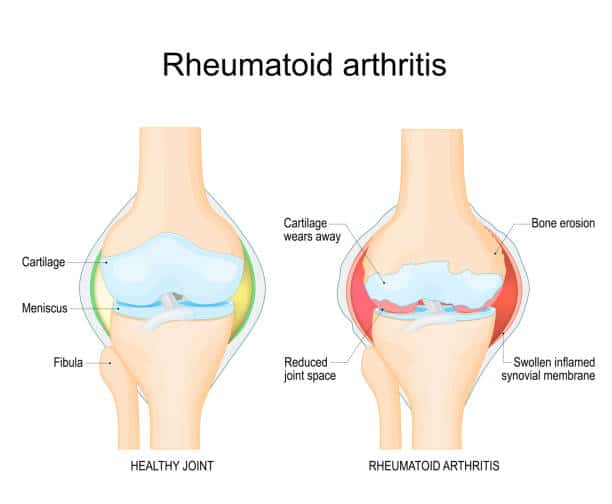
The biggest difference lies in the underlying cause.
- Osteoarthritis results from wear and tear of joint cartilage.
- Rheumatoid arthritis develops because the immune system attacks healthy joint tissue.
While OA mainly causes mechanical damage, RA causes chronic inflammation that may affect multiple body systems.
Quick Comparison Table
| Feature | Osteoarthritis | Rheumatoid Arthritis |
| Cause | Cartilage degeneration | autoimmune disease |
| Age of onset
|
usually older adults
|
often ages 30–60 but can occur earlier
|
| Inflammation | Mild | Significant |
| Joint pattern | often one side first | usually symmetrical |
| Morning stiffness | Less than 30 minutes | often longer than one hour |
| Progression
Organ involvement |
Slow wear and tear
Rare |
chronic inflammatory disease
Possible |
| Fatigue
|
Less common
|
Very common
|
Causes of Osteoarthritis
Several factors increase the risk of OA.
Aging
Cartilage naturally weakens over time.
Previous Joint Injuries
Sports injuries or fractures may accelerate joint damage.
Obesity
Excess body weight increases pressure on weight-bearing joints.
Repetitive Stress
Occupations requiring repeated movements can increase wear.
Genetics
Family history may increase susceptibility.
Causes of Rheumatoid Arthritis
The exact cause remains unknown, but experts believe several factors contribute.
Immune System Dysfunction
The immune system mistakenly attacks healthy tissues.
Genetic Factors
Certain inherited genes increase risk.
Smoking
Smoking significantly raises the likelihood of developing RA.
Hormonal Influences
Women develop rheumatoid arthritis more frequently than men.
Environmental Triggers
Certain infections or environmental exposures may contribute in genetically susceptible individuals.
Symptoms of Osteoarthritis
Symptoms usually develop gradually.
Common signs include:
- Joint pain after activity
- Mild swelling
- Reduced flexibility
- Stiffness after rest
- Bone spurs
- Grinding sensation during movement
Pain often worsens throughout the day.
Symptoms of Rheumatoid Arthritis
RA symptoms often appear in flare-ups.
Common symptoms include:
- Persistent joint pain
- Warm swollen joints
- Morning stiffness lasting more than one hour
- Fatigue
- Fever
- Weight loss
- Weakness
- Symmetrical joint involvement
Small joints in the hands and feet are commonly affected first.
Which Joints Are Usually Affected?
Osteoarthritis
OA frequently affects:
- Knees
- Hips
- Spine
- Thumb joints
- Finger joints
Weight-bearing joints often experience the greatest damage.
Rheumatoid Arthritis
RA commonly affects:
- Wrists
- Fingers
- Toes
- Ankles
- Knees
- Elbows
Symptoms usually occur on both sides of the body.
Morning Stiffness: A Helpful Clue
Morning stiffness helps distinguish these conditions.
Osteoarthritis
Stiffness usually improves within 30 minutes after movement.
Rheumatoid Arthritis
Stiffness may last over an hour and often improves only after significant activity or medication.
How Doctors Diagnose Osteoarthritis
Diagnosis typically involves several steps.
Physical Examination
Doctors assess pain, movement, swelling, and tenderness.
Medical History
Symptoms, injuries, and family history provide valuable clues.
Imaging Tests
Common imaging includes:
- X-rays
- MRI scans
- CT scans in selected cases
These tests help evaluate cartilage loss and bone changes.
How Doctors Diagnose Rheumatoid Arthritis
RA diagnosis often combines symptoms with laboratory testing.
Doctors may order:
- Rheumatoid factor (RF)
- Anti-CCP antibody test
- ESR
- CRP
- Complete blood count
- Joint ultrasound
- MRI
- X-rays
Early diagnosis can reduce long-term joint damage.
Treatment Options for Osteoarthritis
Although OA has no cure, several treatments reduce symptoms.
Lifestyle Changes
Weight management decreases pressure on joints.
Regular low-impact exercise strengthens muscles and improves mobility.
Walking, swimming, and cycling are excellent options.
Physical Therapy
Therapists design exercises to improve flexibility and muscle strength.
Pain Medications
Doctors may recommend:
- Acetaminophen
- Nonsteroidal anti-inflammatory drugs (NSAIDs)
- Topical pain creams
Joint Injections
Steroid injections may temporarily reduce pain.
Hyaluronic acid injections may help selected patients.
Surgery
Advanced disease may require joint replacement surgery.
Hip and knee replacements often restore mobility and reduce pain.
Treatment Options for Rheumatoid Arthritis
RA treatment focuses on controlling inflammation and preventing permanent damage.
Disease-Modifying Antirheumatic Drugs (DMARDs)
These medications slow disease progression.
Methotrexate remains one of the most commonly prescribed options.
Biologic Therapies
Biologic medications target specific parts of the immune system.
These advanced treatments have improved outcomes for many patients.
Corticosteroids
Doctors sometimes prescribe steroids during severe flare-ups.
NSAIDs
These medications relieve pain and inflammation but do not stop disease progression.
Physical and Occupational Therapy
Therapy helps maintain function and protect joints.
Exercise Recommendations
Exercise remains one of the best non-drug treatments for both conditions.
Helpful activities include:
- Swimming
- Water aerobics
- Walking
- Yoga
- Stretching
- Cycling
- Strength training
Always adjust activity levels according to pain and physician guidance.
Risk Factors Compared
Osteoarthritis Risk Factors
- Older age
- Obesity
- Joint injuries
- Repetitive work
- Genetics
Rheumatoid Arthritis Risk Factors
- Female sex
- Family history
- Smoking
- Certain genetic markers
- Autoimmune predisposition
Potential Complications
Osteoarthritis
Untreated OA may cause:
- Chronic pain
- Reduced mobility
- Disability
- Muscle weakness
- Joint deformity
Rheumatoid Arthritis
Untreated RA may lead to:
- Permanent joint destruction
- Lung disease
- Cardiovascular complications
- Eye inflammation
- Osteoporosis
- Increased disability
When Should You See a Doctor?
Medical evaluation is recommended if you experience:
- Persistent joint pain lasting several weeks
- Morning stiffness over one hour
- Swollen joints
- Difficulty performing daily activities
- Fever with joint symptoms
- Rapid worsening of pain
Early treatment often produces better long-term outcomes.
Living Well With Arthritis
Many people successfully manage arthritis with a combination of medication, exercise, healthy eating, and routine medical follow-up.
Simple daily habits can make a major difference:
- Stay physically active.
- Maintain a healthy weight.
- Follow prescribed treatment plans.
- Protect joints during repetitive activities.
- Get adequate sleep.
- Manage stress effectively.
Regular communication with healthcare providers also supports better disease control.
Osteoarthritis vs Rheumatoid Arthritis: Final Verdict
Although osteoarthritis and rheumatoid arthritis both cause joint pain, they represent two very different diseases.
Osteoarthritis develops because cartilage gradually wears down over time, while rheumatoid arthritis results from an immune system attack on healthy joints. RA usually causes more inflammation and can affect organs beyond the joints, making early diagnosis especially important.
Fortunately, modern treatments, rehabilitation strategies, and lifestyle modifications help many people remain active and maintain a good quality of life. Recognizing symptoms early and seeking professional care can prevent complications and improve long-term outcomes.
Frequently Asked Questions (FAQ Schema Style)
What is the main difference between osteoarthritis and rheumatoid arthritis?
Osteoarthritis results from cartilage wear and tear, while rheumatoid arthritis is an autoimmune disease that causes the immune system to attack joint tissue.
Which is more painful, osteoarthritis or rheumatoid arthritis?
Pain varies by individual. Rheumatoid arthritis often causes more severe inflammation and prolonged morning stiffness, while osteoarthritis pain typically worsens with activity.
Can osteoarthritis turn into rheumatoid arthritis?
No. They are separate medical conditions with different causes.
Is rheumatoid arthritis hereditary?
Genetics can increase susceptibility, but environmental and immune-related factors also play important roles.
Can exercise help both conditions?
Yes. Appropriate low-impact exercise improves flexibility, strength, and overall joint function in both osteoarthritis and rheumatoid arthritis.
Is there a cure for either condition?
There is currently no cure for either disease. However, treatments can effectively reduce symptoms, slow progression in rheumatoid arthritis, and improve quality of life.
Which disease affects younger adults?
Rheumatoid arthritis can develop in younger and middle-aged adults, while osteoarthritis most commonly appears later in life.
Do both conditions require surgery?
Not always. Most patients begin with conservative treatments. Surgery is generally reserved for severe osteoarthritis or advanced joint damage.
